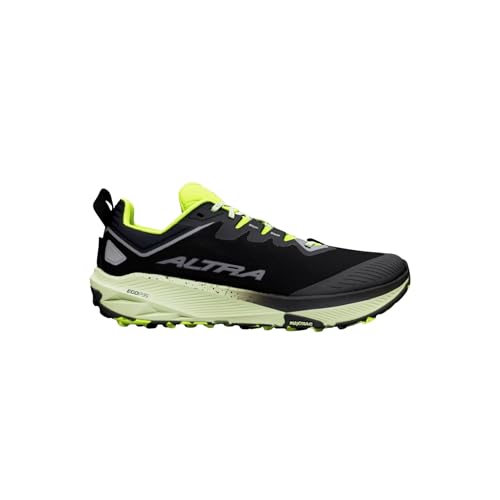
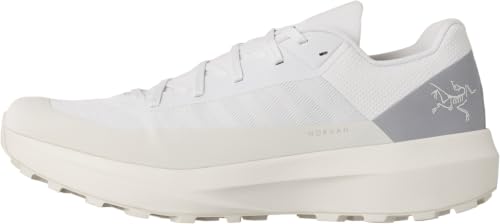
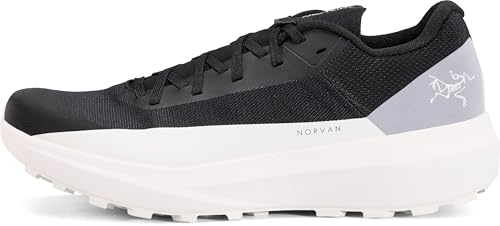


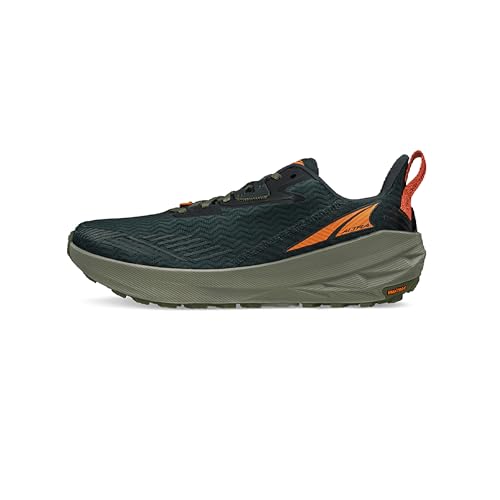
Best all-around choice: moderate grip and balanced cushioning
For mixed, everyday trails, look for a shoe with medium-depth lugs, a stable platform, and enough cushioning to remain comfortable for an hour or two. Moderate lugs bite into packed dirt without feeling clumsy on short paved connectors. A broad heel and forefoot create a steady landing when the path is uneven, while a flexible front lets the foot adapt to small rocks and roots.
This category suits runners who visit local parks, maintained woodland paths, dry singletrack, and gravel roads. It is also a sensible first trail shoe because it does not force you into an extreme design. The ride should feel familiar during an easy run, not like a hiking boot or a track spike.
Favor fit over novelty. The heel should stay seated on climbs, the midfoot should feel held without pressure, and the toes should have room to spread on descents. If two options feel equally good, choose the outsole that matches the wetter version of your normal route. Dry hardpack is forgiving; slick leaves and damp soil reveal a weak outsole quickly.
Best for road-to-trail routes: smoother lugs and an easy transition
A road-to-trail shoe makes sense when every run begins at the front door. Its outsole usually has shallower, more closely spaced rubber than a shoe made for mud. That creates a quieter ride on pavement and more continuous contact on hard surfaces, while still adding traction and protection once the route turns to dirt.
Cushioning is often closer to a road shoe, but the platform may be slightly wider and the upper more resistant to abrasion. This combination works well on canal paths, fire roads, rail trails, urban park loops, and dry, nontechnical singletrack. It is less convincing in deep mud, where small lugs clog, or on steep loose ground, where stronger braking edges help.
Do not assume a hybrid must feel heavy. The useful distinction is how smoothly it handles surface changes. During a test run, notice whether the lugs feel harsh on asphalt and whether the upper keeps your foot centered during a quick turn. A good hybrid disappears beneath you on both surfaces, even if it is not the absolute fastest choice on either one.
Best for technical and rocky trails: secure fit, grip, and protection
Technical terrain rewards precision. Choose a shoe that holds the heel and midfoot firmly enough to prevent sliding across the platform when you land on an angled rock. The outsole should provide full, confident contact, and the foam should resist collapsing sideways. A protective toe bumper is valuable around roots and scree; a rock plate or dense foam layer can soften sharp impacts under the forefoot.
More protection is not automatically better. A very stiff shoe may reduce ground feel, making careful foot placement harder. The right balance depends on speed and experience. Some runners like to sense the shape of every rock, while others relax when the shoe filters out sharp edges.
Check the outsole compound as well as lug depth. Large lugs can still feel uncertain on wet stone if the rubber is hard and slick. Conversely, sticky rubber with sensible spacing may grip rock well without looking aggressive. On a fitting surface, stand on one foot, lean gently side to side, and make a few controlled diagonal steps. Your foot should move with the shoe rather than rolling inside it.
Continue this topic: How to Choose Trail Running Shoes That Fit Your Routes and Feet.
Best for mud and soft ground: deep, widely spaced lugs
Mud shoes behave more like specialized tires. Their lugs are deeper and placed farther apart so soft soil can clear instead of packing the outsole smooth. Directional lugs at the heel add braking on descents, while strong edges at the forefoot help when climbing. A close, low-volume upper also matters because suction from mud can pull at a loose shoe.
This design is ideal for saturated fields, soft forest paths, steep grassy hills, and winter races where traction matters more than pavement comfort. On dry rock or long road sections, the same lugs can feel unstable and may wear quickly. A mud specialist is therefore often a second pair, not the only trail shoe in the closet.
Drainage can be more useful than waterproofing during truly wet runs. Water that enters over the collar of a waterproof shoe has difficulty escaping. A breathable upper and socks that manage moisture may feel better when puddles are unavoidable. After a muddy run, remove the insoles, loosen the laces, rinse away grit with cool water, and let the shoes dry naturally away from direct heat.
Best for long distances: comfort that remains stable
For long trail days, judge cushioning by what happens after fatigue arrives. Soft foam can feel wonderful for five minutes yet become wobbly on uneven ground. A long-distance shoe should combine enough depth to reduce repeated impact with a platform that stays controlled when your ankles and hips are tired.
Toe room becomes increasingly important because feet often swell over several hours. That does not mean buying a loose shoe. The heel and midfoot still need security; the extra space belongs mainly in front of and around the toes. Check that the longest toe has a thumb-width of room and that no seam presses against the small toe or big-toe joint.
Consider the whole day rather than the scale weight. A slightly heavier shoe may earn its place through better grip, a more protective upper, or a shape that reduces foot movement. Practice in the exact socks you intend to wear, and test the shoes on descents before committing to a race. Downhill running exposes toe contact, heel lift, and unstable cushioning faster than a flat jog does.
Best for wide feet or natural toe spread: shape before size
A wide shoe should be wide in the place your foot needs it. Some runners need extra room at the forefoot but a regular heel; others need volume through the midfoot or over the instep. Simply sizing up can create excess length and allow the foot to slide forward, so begin with a foot-shaped last or an available wide width.
Remove the insole and stand on it. Your foot should not spill dramatically over the edges, although an insole is only a rough clue because the upper can add space. Put the shoe back on, lace it securely, and mimic a descent on a ramp if possible. Toes should not strike the front, and the forefoot should not feel pinched as it spreads.
Wide toe boxes are especially useful over long distances, but they still need lateral control. If the upper allows the foot to drift during a side step, the shape is too loose or the lacing needs adjustment. Comfort at rest is not enough; the shoe must keep that comfort while the trail tilts beneath it.
Compare no more than two or three serious candidates at once. Wear the same socks, lace each shoe from the bottom upward, and walk uphill, jog, descend a ramp, turn sharply, and balance on one foot. A well-matched trail shoe makes you think less about the shoe: grip feels dependable, the fit stays secure without numbness, and protection never becomes a burden.
People also ask
Questions that extend this decision
Do expensive trail running shoes last longer?
Not necessarily. Price may reflect premium foam, a waterproof membrane, or a specialized outsole, but durability depends more on terrain, running form, fit, and materials. Soft sticky rubber can grip brilliantly yet wear faster on pavement. A shoe that fits securely may also last better because the upper is not repeatedly stretched by foot movement.
Is one pair enough for both dry and wet trails?
One versatile pair can cover packed dirt, gravel, light mud, and brief road sections. Frequent deep mud, wet rock, or winter conditions may justify a second shoe with a more suitable outsole. Choose the generalist for most weekly miles and add a specialist only when a recurring surface exposes a real limitation.
Should trail shoes feel tighter than road shoes?
They should feel more secure, not smaller. The heel and midfoot need enough hold for off-camber landings, while the toes still need room to spread and move forward slightly on descents. Tightness that causes pressure, tingling, or curled toes is a fit problem rather than useful control.
Are carbon-plated trail shoes the best option for racing?
They can improve efficiency for some runners on runnable courses, but stiffness is not universally helpful on technical ground. A plate may reduce flexibility and ground feel, while a tall platform can feel less precise. Test the shoe on terrain resembling the race and choose reliable control over an untested promise of speed.
How many miles should I run before racing in new trail shoes?
There is no mandatory break-in number, but complete several runs that include climbs, descents, and the race surface. The goal is to reveal heel slip, toe contact, hot spots, and traction behavior. Many modern shoes feel comfortable immediately; confidence should come from varied testing rather than waiting for materials to soften.