


A Trail Lineup Built Around Familiarity
Brooks brings a road-running reputation for approachable fit and dependable daily training into the trail category. Its strongest models do not try to make every run feel exotic. They aim for security, repeatability, and enough protection to let terrain be the challenge rather than the shoe. That character benefits runners buying a first trail pair and experienced athletes who want a reliable rotation anchor. It may be less exciting to someone seeking extremely soft foam, radical geometry, or barefoot-like freedom. The lineup becomes clear when organized by task: Cascadia handles broad trail use, Caldera absorbs long easy miles, Catamount families add speed, Divide smooths the road-to-trail transition, and rugged High Point options support extended outdoor travel. Fit still changes among families, so brand familiarity should begin the try-on rather than end it.
Cascadia: The Stable Center of the Range
Cascadia is Brooks' trail benchmark because it solves many ordinary problems without becoming a narrow specialist. It suits mixed singletrack, gravel, hiking, and daily trail mileage where a runner wants a planted, protective feel. Stability here should not be confused with medical correction; it describes how predictably the platform settles on changing ground. Compared with a maximal cruiser, Cascadia preserves a more traditional relationship with the trail. Compared with a speed shoe, it carries more of the day-to-day workload. Its limitation is the same as its strength: generalists rarely dominate deep mud, very fast racing, or the softest long-distance category. Cascadia is a strong first recommendation when the buyer cannot yet name a specialty, provided the heel holds and the forefoot remains comfortable during an incline test.
Caldera: Cushion for Unhurried Distance
Caldera serves the runner who likes Brooks but wants a broader, more cushioned long-run experience than Cascadia. Its purpose is not simply to add softness. A substantial platform can spread impact and make easy trail cruising feel calmer as duration grows. That can appeal to ultrarunners, larger runners, hikers, and anyone whose legs prefer less trail chatter. The tradeoff is immediacy. A plush platform may feel slower to place through tight rock or less informative on narrow cambers. Caldera belongs on steady long routes where rhythm and comfort matter more than rapid direction changes. It should be compared with Cascadia by terrain severity and desired sensation, not by assuming more cushion is an upgrade. On smooth long trails, Caldera can be the better tool; on varied technical days, Cascadia may remain easier to manage.
Continue this topic: Hoka Speedgoat vs Brooks Cascadia: Cushion or All-Terrain Stability?.
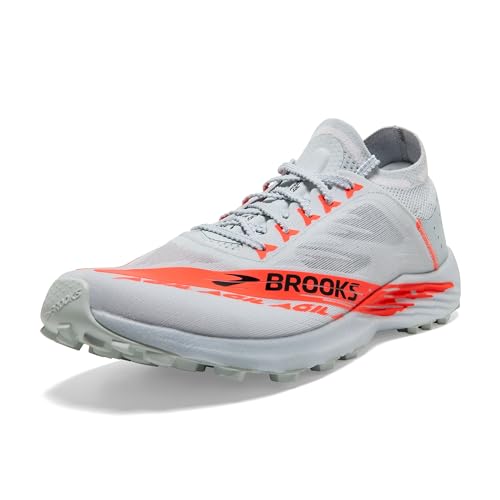
Catamount and Catamount Agil: Performance Branches
Catamount shifts Brooks trail design toward pace. It is for runners who want enough protection for real trail while keeping the shoe responsive during tempo efforts, shorter races, or runnable ultras. Catamount Agil sharpens that purpose with a more overt race-day orientation. The exact propulsion system and current materials need edition-level verification, but the buying logic stays stable: Catamount is the versatile fast option, and Agil is the model to examine when efficiency and competitive intent outweigh casual versatility. Neither should be purchased solely because it is lighter or more advanced. Race geometry can feel less natural at hiking pace, and technical courses may reward control over forward drive. Runners should test whether the platform remains predictable when tired, cornering, and descending—not just whether it feels energetic on a straight path.
Divide and the Road-to-Trail Doorway
Divide lowers the barrier between ordinary running and trail running. It makes sense for suburban routes that mix sidewalks, greenways, crushed gravel, and uncomplicated dirt. The ride feels less specialized, which helps runners who do not want to own a shoe for every surface. That same compromise limits it on deep mud, repeated sharp rock, and long technical descents. Divide should not be dismissed as merely a beginner shoe; experienced runners can value its simplicity for recovery runs and travel. The important question is how much of the route demands a true trail outsole and upper. If the dirt is moderate and pavement remains substantial, Divide can be more pleasant than Cascadia. If the route routinely requires braking, edging, and rock protection, move up the range rather than asking a hybrid to behave like a mountain tool.
High Point and Long Outdoor Days
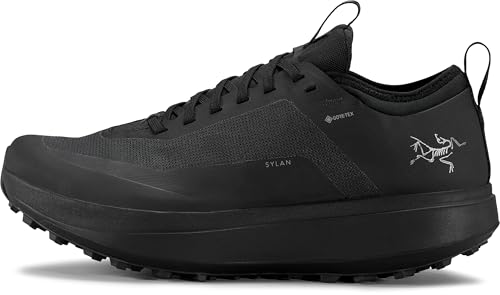
Brooks uses the High Point name around rugged, protective outdoor use, including options intended to manage rough conditions beyond ordinary daily running. These models can interest fast hikers, run-hikers, and athletes moving through variable weather or debris. The buyer must distinguish upper protection from waterproofing and from traction; they solve separate problems. A higher or more protective upper may keep debris out yet feel warmer. A membrane may resist shallow moisture yet drain slowly after water enters from above. A rugged outsole may increase security off-road but feel unnecessary on pavement. Confirm the exact product type before linking from a brand hub because High Point names can cover distinct constructions. Choose it for a real exposure problem, not because more material automatically means a safer trail experience.
Fit, Widths, and Trail Lockdown
Brooks often feels familiar to runners coming from its road shoes, but identical size labels do not guarantee identical trail fit. Trail uppers must control lateral movement and braking, so a secure midfoot matters more than a soft step-in impression. Current width offerings can make Brooks useful for broad feet, yet width should be located: toe splay, instep volume, and heel breadth are different fit challenges. During try-on, walk down an incline and turn sharply. Toes should not touch the front, the heel should not lift, and the laces should not require painful tension. Long-run swelling space belongs in the forefoot, not as loose length behind the heel. If two Brooks families both fit, choose by ride and terrain rather than treating the roomier option as automatically better.
Final Verdict
Brooks offers one of the easiest trail ranges to navigate because each major family has a recognizable job. Cascadia is the stable daily reference, Caldera cushions steady distance, Catamount adds versatile speed, Catamount Agil focuses race intent, Divide handles mixed urban access, and High Point addresses more protected outdoor movement. The brand is a particularly strong starting place for runners who want predictability rather than a radical platform change. It is less automatic for people seeking a very anatomical toe box, zero drop, or the deepest soft-ground lugs. Choose the model that solves the hardest recurring part of the route, then confirm fit on an incline. A Brooks hub should help the reader move sideways when priorities change: more cushion from Cascadia to Caldera, more speed toward Catamount, and more pavement toward Divide.
People also ask
Questions that extend this decision
Which Brooks trail shoe is best for a beginner?
Cascadia is the broadest starting point for runners using genuine mixed trail, while Divide may be better when pavement and easy paths dominate. Beginners do not need the most aggressive model; they need secure fit, enough grip for normal terrain, and predictable transitions.
How is Caldera different from Cascadia?
Caldera emphasizes cushioned long-run cruising, whereas Cascadia emphasizes stable versatility across changing terrain. Choose Caldera when impact comfort and steady rhythm lead. Choose Cascadia when technical predictability, hiking crossover, and one-shoe usefulness matter more.
Is Catamount only for racing?
No. Catamount can serve faster training and energetic daily runs as well as races. Catamount Agil is the more race-specific branch. Either should be judged at the runner's real pace and on representative turns, because an efficient platform is not automatically versatile.
Do Brooks trail shoes fit like Brooks road shoes?
They may feel familiar, but trail uppers and platforms are built for different forces. Use the road size only as a starting reference. Check heel hold, lateral security, toe clearance on descents, and current width options before assuming the same fit.
Which Brooks model works for hiking and running?
Cascadia is the most straightforward crossover because its stability and protection suit both activities without excessive specialization. Caldera may appeal to cushion-focused hikers, while High Point options can suit rougher exposure. Pack weight and walking fit should be tested separately.