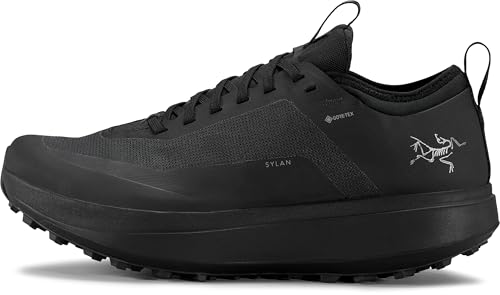
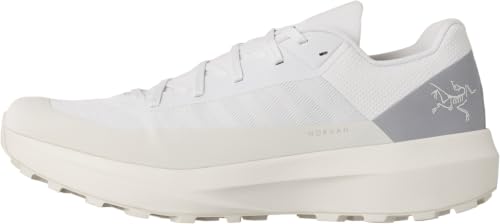
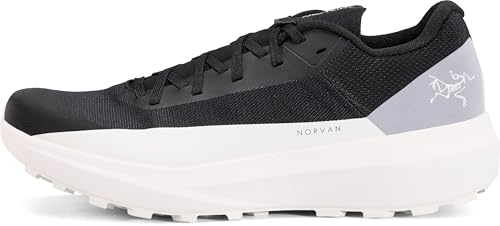
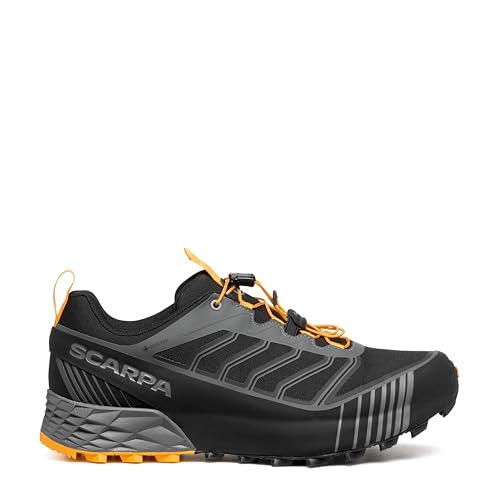

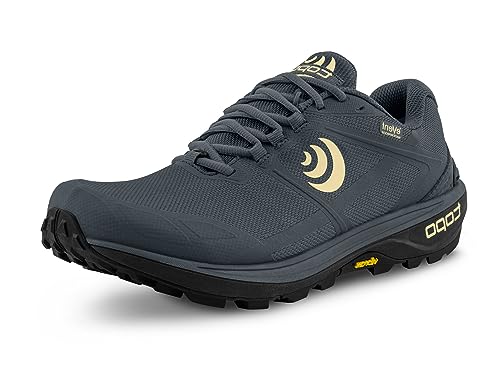
Classify the Rock Under Your Feet
Solid slab stays in place but can be smooth, tilted, and slick when wet. Loose scree rolls beneath the outsole, making platform stability more important than a dramatic lug. Embedded stones concentrate pressure through small points. Boulder fields require precise edging and enough toe protection for occasional contact. Dirt threaded between rocks rewards a pattern that can bite soil without sacrificing too much hard-surface contact. Describe the route by movement as well as material: does the ground roll, polish, tilt, or protrude? Also note descent length and moisture. A stable dry climb can become a demanding wet return. Choose for the hardest recurring condition rather than a generic technical label.
Prioritize Rubber Compound and Contact
Rock traction begins where rubber touches stone. Softer, tackier compounds often conform and adhere better, particularly on damp slabs, but may wear faster on abrasive ground. Harder rubber can survive long mileage while feeling less confident on polished surfaces. Lug faces should provide useful contact instead of balancing the shoe on narrow tips. Moderate, broad shapes commonly work on bare rock; stronger perimeter edges help with rubble and traverses. Flex grooves allow the outsole to wrap slightly over convex forms, yet excessive twisting can feel uncontrolled. Inspect exposed midsole because sharp edges may slice uncovered foam. Protection claims above the outsole cannot rescue a compound that slips on the route's dominant rock.
Choose Protection Without Erasing Placement
A rock plate spreads pointed pressure, while cushioning reduces repeated impact. Either can help; neither is automatically required. Thick, controlled foam may block ordinary stones without a separate layer. A flexible textile plate can protect a lower shoe while retaining bend. Rigid structures offer stronger isolation but may prevent the sole from conforming. The desired amount changes with duration. Short technical runs reward feedback and quick corrections, whereas long mountain days can make every sharp point more distracting as feet fatigue. Look for protection that quiets painful detail while preserving information about angle and movement. If the shoe makes all terrain feel vague, it may carry more structure than your style needs.
Continue this topic: La Sportiva Bushido III Review: Precise Control for Rocky Technical Trails.
Stability Is a Relationship Between Height and Width
High stack is not inherently unsafe, but height increases leverage when only an edge lands. A broad outsole, raised sidewalls, and foam that compresses progressively can stabilize a tall design. A narrow soft platform may roll before perimeter rubber engages. Lower shoes provide direct feedback and quick adaptation, though they ask more from feet and calves. Stand on an angled step and load the lateral edge gently. The platform should resist abrupt folding, and the upper should keep the foot over the outsole. Also consider heel shape. Extreme flare adds contact but can catch between close stones. The right geometry feels proportionate rather than simply wide or low.
Secure the Foot for Climbs and Descents
Downhill impact pushes the foot forward; traverses push it sideways. Leave appropriate toe length, then anchor the heel and midfoot so that extra room does not become movement. A gusseted tongue helps maintain alignment and blocks grit. Overlays can support lateral hold, but stiff material should not crease against the toes. A protective bumper is useful in broken rock if it clears the nails. Test fit late in the day with normal trail socks, and simulate a descent on an incline. Wide feet need enough forefoot volume without a loose waist. Technical fit is not uniformly tight: it combines a held rearfoot with space where swelling occurs.
Practice Before the Route Becomes Consequential
Take new shoes onto a known loop that includes a slab, loose stones, a camber, and a moderate descent. Walk each feature first and notice where the outsole shifts from adhering to sliding. Run comfortably rather than using speed to prove the shoe. Pay attention to forefoot sting, heel lift, and whether the platform catches gaps. Wet testing should occur in a controlled location, not for the first time above exposure. Afterward, inspect rubber edges, exposed foam, the upper bond, and pressure marks on the foot. Small problems become larger after hours of descent. Technique still matters: shorter steps and deliberate placement reduce braking forces that overwhelm any sole.
Adjust Technique to Preserve Available Grip
Footwear works best when braking forces remain manageable. Shorten the stride on loose descents, keep the landing closer beneath the body, and avoid abrupt direction changes on polished slab. Lift the feet deliberately in broken terrain so toe protection is a backup rather than the main strategy. Scan several steps ahead and choose stable surfaces before speed removes options. When the route is wet, test an uncertain rock with a controlled walking load. These habits do not compensate for unsuitable rubber, but they reveal whether a capable shoe is being overwhelmed by movement. Good equipment expands control; deliberate technique keeps that control usable. Fatigue changes placement, so slow before precision disappears rather than after the first uncontrolled step. On exposed routes, conservative pacing is part of the footwear plan because no outsole removes consequence.
Final Verdict
For rocky terrain, select the outsole before the feature list. It must make dependable contact with the route's stone, whether that means slab-oriented rubber faces or stronger edging for scree. Then choose enough underfoot protection to prevent point pressure from altering the stride, a platform whose width suits its height, and an upper that secures descents. Rock plates, toe guards, and maximal foam are tools rather than proof of capability. The successful shoe lets you read the surface without being punished by every edge. Test it on familiar rock, including controlled moisture if relevant, and reject any pair that slides internally or tips unpredictably. Confidence comes from a balanced system, not from the most armored construction.
People also ask
Questions that extend this decision
What shoes are best for rocky trails?
Look for rock-appropriate rubber, stable geometry, secure heel and midfoot fit, toe clearance, and enough pressure protection for the distance. The ideal lug pattern differs between bare slabs and loose rubble, so choose for the recurring surface rather than appearance.
Do rocky trails require a rock plate?
Not always. Firm or thick foam can provide sufficient shielding, and smooth slabs may not create much point pressure. A plate helps when sharp embedded stones repeatedly reach through the sole or when long duration makes localized sensation disruptive.
Which lugs grip rock?
Moderate lugs with broad faces generally create useful hard-surface contact. Defined edges help on loose material between stones. Rubber compound and wet performance are at least as important as depth; tall narrow knobs can fold or reduce contact on smooth slab.
How should trail shoes fit for descents?
Leave space ahead of the toes while securing the heel and midfoot. The foot should not slide forward under braking or spill sideways on a camber. Test late in the day with normal socks, since swelling changes both length and volume.
Are high-stack shoes safe on rocks?
They can be when the base is broad, foam is controlled, sidewalls cradle the foot, and the upper holds securely. Very tall narrow designs may feel less predictable on angled landings. Field testing matters more than stack height alone.