

Start with your foot, not the category label
A women's designation can describe a different size range, color assortment, last, or heel-to-forefoot proportion, depending on the brand. It does not guarantee a narrow heel or a particular arch shape, and it certainly does not mean every woman will fit it. Some runners have low-volume feet; others need a broad midfoot, high instep, or wide forefoot. Measure both feet and note where past shoes have rubbed, pinched, or slipped. If a men's or unisex version gives the best combination of length, width, and hold, it remains a legitimate option after careful size conversion. Treat the label as a place to begin trying shoes rather than a rule about anatomy. The trail cannot read the box; it only reveals whether the fit works in motion.
Build the fit from heel to toes
The heel should sit calmly in the cup when you climb, while the midfoot should feel wrapped without lace pressure or numbness. At the front, toes need room to lie naturally and stay clear of the bumper during a downhill stop. That balance matters more than achieving a certain amount of empty space. A long shoe with poor heel hold can still drive toes forward. A tapered forefoot can crowd the little toe even when the length looks generous. Try both shoes with the socks you use outside, walk on an incline, and make several side steps. If you must overtighten the laces to gain control, the volume or shape is probably wrong. Uppers can soften, but a painful last will not reshape itself into a comfortable one.
Match tread to the ground you run most
For hardpack, gravel, and routes with pavement connectors, moderate shallow lugs usually feel smoother than a soft-ground outsole. Mud rewards deeper, more widely spaced lugs that can penetrate and release loose soil. Rocky technical trails ask more from rubber quality, underfoot protection, and upper hold; tall lugs alone do not create secure contact on hard stone. Think about the route after rain, not only on its best summer day. A versatile first pair should handle the majority of your mileage rather than the most dramatic trail on your wish list. If your week includes very different surfaces, rotating a road-to-trail shoe with a specialist mud or mountain shoe can make more sense than forcing one outsole to be excellent everywhere.
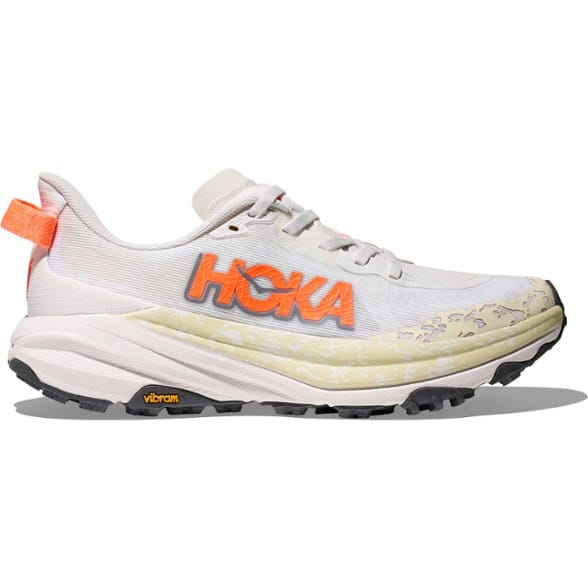
Continue this topic: HOKA Speedgoat 6 Women's Review: Confident Cushioning for Technical Trails.
Choose cushioning that stays controlled
Cushioning affects underfoot comfort, trail feedback, and how high the foot sits above uneven ground. A generous stack can feel protective during long outings, but the foam and base must remain composed when you land off-center. A lower platform can communicate surface changes clearly, though some runners find it tiring on repeated rocks or hard ground. Do not equate softness with comfort automatically. A moderately firm shoe that fits well may feel better after two hours than a plush model that allows the foot to wander. Stand on one foot, turn, and step laterally during the try-on. If the platform wobbles before the outsole settles, compare a broader base or more controlled foam. Let distance influence the shortlist without letting stack height make the entire decision.
Account for size changes across a long run
Feet can gain volume with heat, time, and repeated loading, but the amount differs from runner to runner. A half-size increase is not mandatory. First identify whether you need extra length, forefoot width, or space over the instep. For long races, test shoes after a substantial training session, when the feet are warmer and closer to their late-event condition. On a slope, make sure the larger option still holds the heel and prevents side-to-side movement. Thick socks, replacement insoles, and waterproof liners also occupy volume. Fit the complete setup rather than the empty shoe. Choose for the larger foot if your feet differ, then use thoughtful lacing on the smaller side instead of compressing the larger one into an inadequate size.
Consider weather protection without trapping every drop
A waterproof upper can be useful in cold rain, shallow snow, damp vegetation, and conditions where water is likely to stay below the collar. In warmer weather or repeated stream crossings, breathable mesh often manages heat and drainage better. Once water pours over a low collar, a membrane can slow its escape. The waterproof version of a familiar model may also feel stiffer or lower in volume, so try it separately. Pair the shoe with socks that manage moisture and leave enough room for the chosen thickness. If winter is a small part of the year, a breathable main pair plus a seasonal specialist may be more comfortable than wearing a warm membrane shoe through summer. Weather readiness is a use-case choice, not a premium badge.
Use a short movement test before committing
Try shoes later in the day when possible, with your usual socks and any insole you plan to keep. Walk briskly until the upper warms. Face down a safe ramp, bend the knees, and press forward; the toes should remain clear. Face uphill and drive through the forefoot while checking for heel lift. Turn, sidestep, and pause on one foot to feel whether the upper holds you over the platform. Compare adjacent sizes or widths rather than rationalizing the first pair. When buying online, keep the outsole spotless until the decision is certain. Make notes about the exact model and version because an update can change fit even if the family name remains. A deliberate ten-minute check can prevent hours of trail discomfort.
Final Verdict
The best women's trail running shoe is not the most aggressively marketed women's model; it is the shoe that matches your foot and the work you ask it to do. Secure the heel and midfoot, protect the toes on descents, then select grip, cushioning, and weather features for your regular terrain. Compare women's, unisex, and converted men's sizes when useful, but test the actual shoe rather than assuming equivalent shapes. A calm, forgettable fit is a success. It lets you pay attention to roots, turns, pacing, and the landscape instead of negotiating with pressure points. Begin with versatility, learn from real runs, and add specialist footwear only when a recurring condition gives you a clear reason.
People also ask
Questions that extend this decision
Are women's trail running shoes narrower than men's shoes?
Some are built on a lower-volume or differently proportioned last, but the change varies by brand and model. Never assume the label predicts your fit. Compare actual width, heel shape, instep room, and platform dimensions in the specific version.
Can women wear men's trail running shoes?
Yes, if the converted size and shape fit securely. Men's versions may offer a broader platform or different volume, which helps some feet and feels loose on others. Test downhill toe clearance and heel hold rather than relying on conversion alone.
Should women's trail shoes be a size larger than everyday shoes?
Not automatically. Running clearance, swelling, width, and the brand's internal shape matter more than a fixed size increase. Try the neighboring half size and keep the smallest option that protects toes while maintaining control.
What trail shoe features matter for long distances?
Reliable fit after swelling, controlled cushioning, durable traction, and an upper that does not create pressure are key. Long-distance comfort is not the same as maximum softness; stable geometry and secure hold remain important when fatigue increases.
Do women need different arch support in trail shoes?
Arch needs are individual, not determined by gender. Choose a shoe that feels comfortable and stable without a hard or intrusive arch sensation. Persistent pain or altered sensation deserves advice from a qualified health professional.