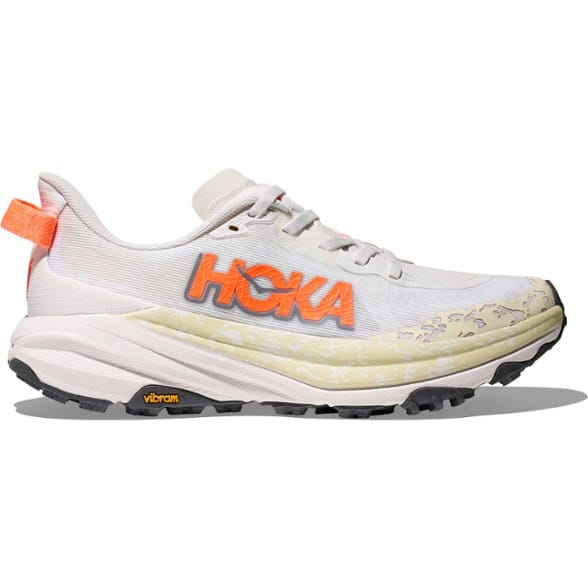

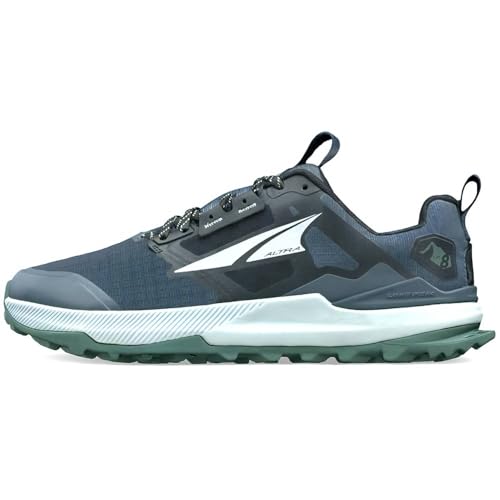
Opposite Trail Philosophies
Speedgoat creates distance from the ground. Its identity is built around reducing the repeated punishment of rugged surfaces and supporting long efforts with a substantial platform. Lone Peak seeks a more natural interaction. Its foot-shaped concept and flexible feel let the foot spread and respond rather than treating trail texture chiefly as something to block. The contrast is not protection versus no protection; both are legitimate trail shoes. It is filtered protection versus sensory access. Some runners relax when a shoe absorbs irregularities. Others feel most secure when they can sense the camber and adjust quickly. The important insight is that confidence can come from either direction. Buying the more cushioned shoe is not automatically safer, and buying the lower-feeling shoe is not automatically more skilled.
Drop, Stack and Transition Implications
The Lone Peak's zero-drop geometry should dominate the first screening question. Runners adapted to conventional drop may experience new calf, foot or Achilles loading if they replace all mileage at once. A gradual rotation is more sensible than a dramatic switch, and discomfort should not be treated as proof that adaptation is working. Speedgoat also requires a sensory adjustment, but of a different kind. Its taller platform may feel less familiar on off-camber landings to runners accustomed to low shoes. A broad base can support stability, yet individual ankle control and foot placement still matter. One transition changes tissue loading; the other can change leverage and trail perception. Neither can be evaluated responsibly by standing on a flat store floor for thirty seconds.
Cushioning, Rock Protection and Ground Feedback
On sustained rock, the Speedgoat has the straightforward advantage for runners who want isolation. Its cushioning helps prevent each sharp edge from becoming a separate event and can preserve comfort late in a long outing. The cost is reduced detail. Runners who use sensation to position the foot may feel less informed. Lone Peak allows more trail information through the platform, which can improve perceived control for adapted runners and make easy terrain feel lively. On relentless sharp rock, that same feedback can become fatigue. The Lone Peak buyer should genuinely want ground connection, not merely accept it to gain toe room. A runner who wants Altra shape with more isolation should compare another Altra family instead of assuming every foot-shaped model shares the Lone Peak's ride.
Continue this topic: Altra Lone Peak vs Saucony Peregrine: Toe Room or Trail Precision?.
Toe Shape, Midfoot Hold and Swelling
Lone Peak has the clearer proposition for toe splay. Its forefoot geometry is intended to follow the foot more naturally, a useful trait when toes spread during long days. That does not mean the entire shoe is uniformly wide, and a high-volume midfoot may still need careful evaluation. Speedgoat fit is more traditionally performance-oriented, with current wide versions potentially offering space for runners who like its ride. A wide label and a foot-shaped toe box solve different problems. In both, swelling allowance should not become sloppy length. The heel must remain anchored and the foot must not slide forward on descents. Test with race socks and late-day feet when possible. Pressure at rest usually does not improve after several hours on trail.
Grip and Technical Handling
Speedgoat combines its rugged outsole intent with a protective platform, making it a persuasive choice for rocky long routes where the runner wants to commit through rough sections. Its handling is best for someone who trusts the platform height. Lone Peak gains technical confidence from flexibility, forefoot freedom and a closer relationship with the surface. It can feel intuitive on uneven trail for runners who like their feet to adapt. Soft mud is not the central strength of either comparison candidate; examine dedicated variants or models if mud dominates. Wet-rock claims should remain modest because the exact outsole compound, contamination and wear matter. Whichever model fits more securely will often outperform the theoretically grippier option during traverses and braking.
Ultramarathons, Hiking and Daily Training
Speedgoat is the easier first recommendation for a rugged ultramarathon when the runner knows cushioning reduces late-race fatigue. It also works for fast hiking, though a heavy pack makes lateral fit testing important. Lone Peak appeals to adapted zero-drop ultrarunners and hikers who value swelling room and natural movement over plush isolation. Its long-distance suitability depends on the runner's history, course and tolerance for trail feedback. For daily training, Speedgoat may feel excessive on smooth paths, while Lone Peak may demand more lower-leg work than a new zero-drop runner should repeat every day. A rotation can be useful: it allows the runner to choose the platform that matches the session instead of asking one philosophy to cover every surface and load.
Choose Speedgoat for Protection-Led Miles
Select Speedgoat if rocky terrain, long descents and accumulated impact are the problems you most want the shoe to solve. It is also the clearer option if zero drop is unfamiliar and you do not want footwear adaptation to become part of a training block. Avoid buying it by default if you consistently dislike tall platforms or need a very anatomical forefoot.
Choose Lone Peak for Adapted Natural Movement
Select Lone Peak if toe freedom, zero-drop geometry and flexible ground feel already align with your running or hiking history. It is especially coherent for runners who feel constrained by tapered trail shoes yet still want an upper that can hold technical movement. Do not choose it solely because your current shoe is narrow; zero drop introduces a separate decision that toe room cannot erase.
Final Verdict
The Hoka Speedgoat wins for cushioning, sharp-ground isolation and a protection-first approach to rugged distance. The Altra Lone Peak wins for toe splay, flexible movement and an intentionally ground-connected ride for runners already adapted to zero drop. Break the tie in this order: first drop readiness, then foot shape, then preferred trail sensation. A zero-drop newcomer with a wide forefoot should not skip the adaptation question; a Speedgoat fan with toe pressure should not ignore shape simply because the cushioning works. If both fit, use the course. Sustained rock and long descents favor Speedgoat's protection. Moderate terrain where natural movement matters favors Lone Peak. The best choice is the model whose underlying philosophy supports how you already move, not the one that asks you to become a different runner before race day.
People also ask
Questions that extend this decision
Which is better for swollen feet late in an ultra?
Lone Peak's forefoot shape may better accommodate toe splay, but secure midfoot and heel fit still matter. Speedgoat wide versions may suit runners needing space throughout. Try shoes later in the day and test descents; extra volume that causes sliding is not a swelling solution.
Does the Speedgoat's cushioning make it unstable?
Not inherently. A broad platform can feel supportive, while height can feel awkward to runners who prefer low leverage on off-camber ground. Individual control, fit and experience decide. Test the shoe on uneven surfaces rather than inferring stability from cushioning depth alone.
Can a zero-drop beginner use Lone Peak for an ultra?
It is a poor time to make an abrupt transition. A runner can gradually build experience in zero drop, but an ultra should follow successful shorter runs and long training outings without lower-leg problems. Race distance does not accelerate tissue adaptation.
Which protects better from sharp rocks?
Speedgoat is the more protection-led option and is usually the stronger starting point for runners who want less sharp-ground sensation. Lone Peak preserves more trail feedback. Protection preferences vary, so test on representative rock rather than relying on a smooth-path impression.
Is either shoe ideal for deep mud?
Neither is automatically the best deep-mud answer. Their standard versions are broader trail tools. If mud is the main surface, compare soft-ground specialists with lug spacing and upper security designed for that condition. Current variants should be verified before making a terrain claim.