 View on Amazon
 Product-first buyer collection
Wide Toe Box Trail Running Shoes
Anatomical forefoot room separated from true wide-width availability.
Read the supporting guides ↓As an Amazon Associate, we may earn from qualifying purchases.
View on Amazon  View on Amazon
  View on Amazon
  View on Amazon
  View on Amazon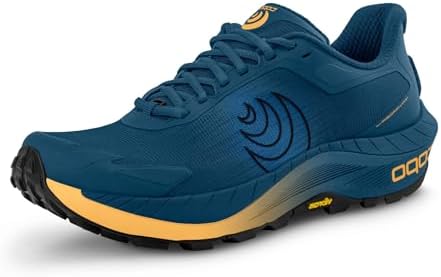
Topo Athletic · Exact Amazon product
Topo Athletic Men's MTN Racer 4 5mm Drop Trail Running Shoes
Men; technical trail
Topo Athletic · Exact Amazon product
Topo Athletic Men's Terraventure 4 Comfortable Cushioned Durable 3MM Drop Trail Running Shoes, Athletic Shoes for Trail Running
Men; technical trail
Topo Athletic · Exact Amazon product
Topo Athletic Men's Terraventure 4 WP Waterproof 3mm Drop Trail Running Shoes
Men; wet technical trail; waterproof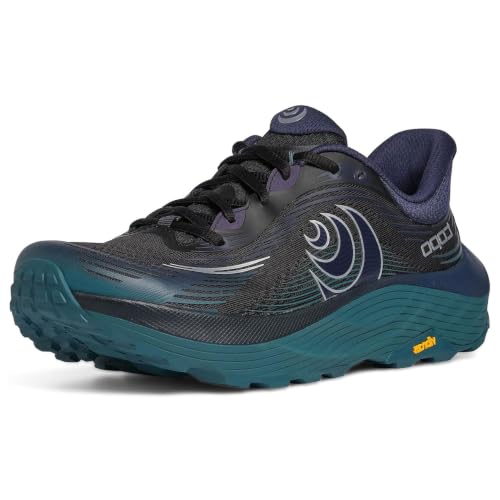
Topo Athletic · Exact Amazon product
Topo Athletic Men's Ultraventure 5 High-Cushion Trail Running Shoes | ZipFoam Midsole, OrthoLite Performance Insole, Vibram XS Trek EVO Outsole, Trail Running, Hiking, Road to Trail
Men; road-to-trail
Topo Athletic · Exact Amazon product
Topo Athletic Women's MTN Racer 4 5mm Drop Trail Running Shoes
Women; technical trail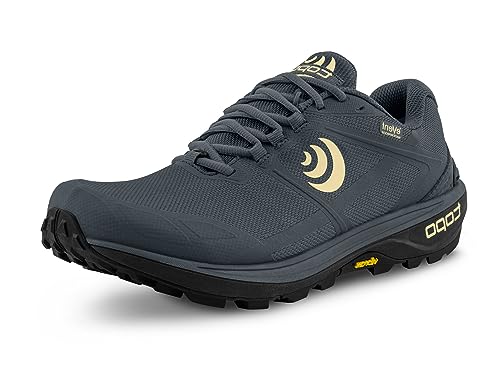
Topo Athletic · Exact Amazon product
Topo Athletic Women's Terraventure 4 WP Waterproof Comfortable Cushioned Durable 3MM Drop Trail Running Shoes, Athletic Shoes for Trail Running
Women; wet technical trail; waterproofDecision checkpoint
Room at the toes, hold through the middle
An anatomical forefoot can allow the toes to spread without enlarging every part of the shoe. That is useful when your heel and midfoot already fit well but a tapered front feels restrictive.
Try the shape instead of judging by the widest-looking photo. Check whether the little toe is pressed inward and whether the foot slides forward on a decline. A true wide size may be the better question when pressure extends farther back. The real-width guide explains this difference, and the fit helper lets you start with the problem you actually feel.
Topical support
Related guides and comparisons
fit
How Much Toe Room Do Trail Running Shoes Need?
Trail running shoes need enough room for the toes to spread and remain clear of the front when you brake downhill, but not so much that the forefoot slides around. Judge toe room in three dimensions: length ahead of the longest toe, width around the toe joints and height over the nails. Secure heel and midfoot fit must keep that space usable.
paaHow to Find a Wide Toe Box Without Losing Trail Control
A wide toe box gives the forefoot room to spread without necessarily making the heel or midfoot wider. That shape can reduce side pressure and improve comfort as feet swell, but it must be paired with secure rearfoot hold. True wide sizing adds circumference or platform width according to the brand and may suit a foot that needs space beyond the toes. Test both shape and volume: toes should move, the big toe should remain straight, and the foot should not slide laterally on cambers. Buy for the larger foot, use normal trail socks, and check downhill clearance. Room is useful when controlled; excess length or a loose waist reduces precision.
paaHow to Choose Trail Running Shoes That Fit Your Routes and Feet
Begin with the routes that will account for most of the shoe's mileage, not the adventure you might attempt once. Smooth dirt, gravel, and paved connectors favor shallow or moderate tread. Rocky singletrack benefits from secure fit, durable rubber, and underfoot protection. Mud and soft soil call for deeper, widely spaced lugs. Wet slabs place more emphasis on sticky rubber than dramatic tread depth.
paaTrail Shoe Drop Explained: How Heel-to-Toe Offset Changes the Ride
Heel-to-toe drop is the difference in height between the heel and forefoot inside a shoe. A 6 mm shoe places the heel about 6 mm higher than the forefoot; it may still be highly cushioned or relatively low to the ground. The most useful starting point is the drop you already run in comfortably, followed by a gradual comparison if you want something different.