 View on Amazon
 Product-first buyer collection
Trail Running Shoes for Beginners
Versatile first pairs with predictable grip and no extreme geometry.
Read the supporting guides ↓As an Amazon Associate, we may earn from qualifying purchases.
View on Amazon 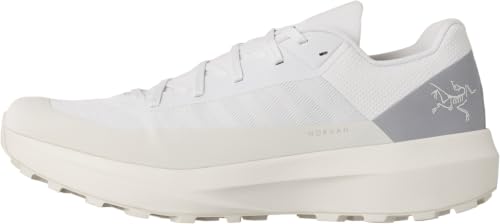
Arc'teryx · Exact Amazon product
Arc'teryx Men's Norvan LD 4 Shoe | Lightweight Mountain Running Shoes for Men, Long Distance Running Shoes for All Terrains
Men; rocky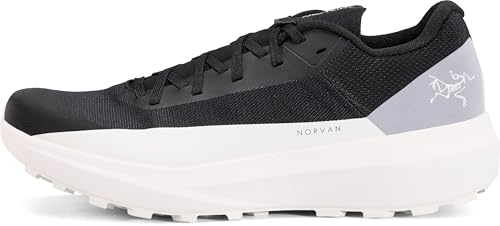
Arc'teryx · Exact Amazon product
Arc'teryx Women's Norvan LD 4 Shoe | Lightweight Mountain Running Shoes for Women, Long Distance Running Shoes for All Terrains
Women; rocky View on Amazon
Salomon · Exact Amazon product
Salomon Men's Alphaglide Trail Running Shoes for Hiking
Men; mixed surface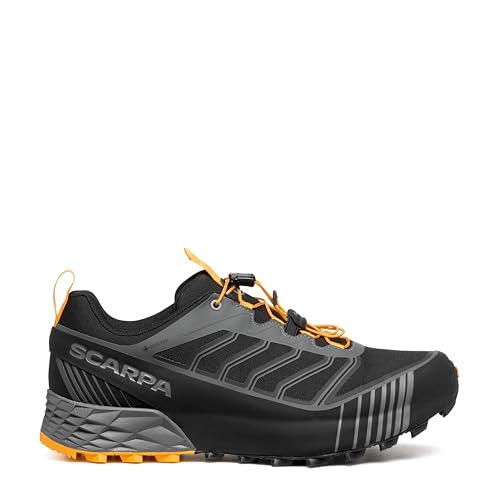
Scarpa · Exact Amazon product
SCARPA Men's Ribelle Run 2 GTX Running Shoes | Lightweight, Performance Trail Runners
Men; technical trail; waterproof
adidas Terrex · Exact Amazon product
adidas Outdoor Terrex Agravic SL Trail Running Shoes
Men; mixed trail
adidas Terrex · Exact Amazon product
adidas Outdoor Terrex Agravic Speed Ultra 2 Trail Running Shoes
Men; trail racing View on Amazon
  View on Amazon
  View on Amazon
 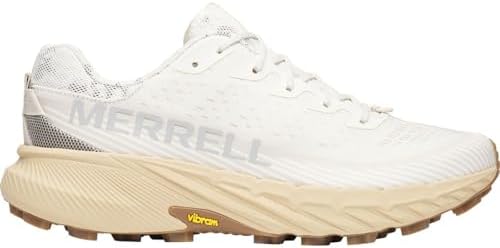 View on Amazon
 Decision checkpoint
Start with the route you already run
For an easy park trail or gravel loop, a versatile shoe may be more useful than an aggressive specialist. Save deep mud lugs or highly specialized race geometry for a specific route problem you can identify.
Try the shoe on both level ground and a gentle incline where permitted. The heel should stay settled and the toes should have room on descents. Your first pair is also a chance to learn which features matter to you. Make the initial outings short enough to notice pressure or sliding before committing to a distant route.
Topical support
Related guides and comparisons
listicle
Best Trail Running Shoes for Beginners: Choose Your First Pair With Confidence
A beginner's best trail shoe is usually a comfortable, versatile model with secure fit, moderate cushioning and enough traction for local paths. Start with the terrain you will run most, not the most dramatic trail you can imagine. Avoid changing to extreme cushioning, zero drop or aggressive mud lugs unless those features solve a clear need and you can adapt gradually.
paaFirst Trail Running Shoes: A Beginner's Guide to Fit and Grip
Beginners should start with a comfortable, versatile trail shoe that fits securely and matches nearby routes. Moderate cushioning, familiar drop, and enough tread for local dirt are usually easier to learn in than extreme lugs, very tall soft foam, or an abrupt zero-drop change. Road shoes can handle smooth dry paths, but dedicated trail shoes help as terrain becomes loose or technical.
paaHow to Choose Trail Running Shoes That Fit Your Routes and Feet
Begin with the routes that will account for most of the shoe's mileage, not the adventure you might attempt once. Smooth dirt, gravel, and paved connectors favor shallow or moderate tread. Rocky singletrack benefits from secure fit, durable rubber, and underfoot protection. Mud and soft soil call for deeper, widely spaced lugs. Wet slabs place more emphasis on sticky rubber than dramatic tread depth.
paaTrail Shoe Drop Explained: How Heel-to-Toe Offset Changes the Ride
Heel-to-toe drop is the difference in height between the heel and forefoot inside a shoe. A 6 mm shoe places the heel about 6 mm higher than the forefoot; it may still be highly cushioned or relatively low to the ground. The most useful starting point is the drop you already run in comfortably, followed by a gradual comparison if you want something different.