
Topo Athletic · Exact Amazon product
Product-first buyer collection
Outsole, upper and midsole choices for abrasive trails and high mileage.
Read the supporting guides ↓As an Amazon Associate, we may earn from qualifying purchases.
Topo Athletic · Exact Amazon product
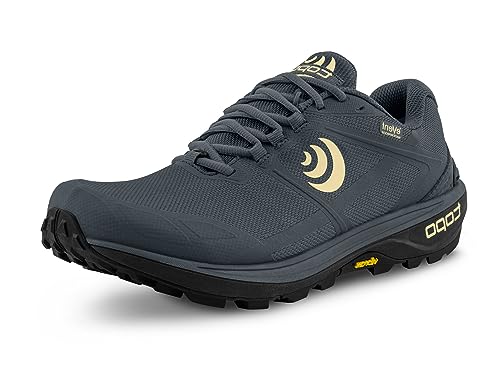
Topo Athletic · Exact Amazon product
Decision checkpoint
Inspect your previous pair before buying its replacement. Rounded lugs suggest a traction problem; a loose or torn upper suggests a hold problem; a changed underfoot feel asks a different question again. One durability label cannot describe all three.
Match the next shoe to that failure pattern and your surface. Abrasive rock and long paved connectors can wear an outsole differently from soft trail. Use the rotation planner for a planning range, then inspect actual condition. Retiring a pair from technical running does not automatically mean it is unsuitable for every easier use.
Topical support
Durable trail shoes are built to keep their grip, shape, and foot hold through the terrain where they are used. Thick rubber alone is not enough. Outsole compound must suit abrasion, the upper needs reinforcement at real flex and contact zones, and the foam should compress evenly rather than developing a lean. Fit affects life because a sliding foot stresses lining and upper material. Choose for local wear: pavement connectors round lugs, sharp gravel cuts exposed foam, mud strains bonds, and rocky traverses abrade sidewalls. Inspect the shoe regularly and replace it when traction or structure changes movement, not when the upper merely looks dirty. A balanced construction usually outlasts one overbuilt component attached to weaker neighbors.
paaBegin with the routes that will account for most of the shoe's mileage, not the adventure you might attempt once. Smooth dirt, gravel, and paved connectors favor shallow or moderate tread. Rocky singletrack benefits from secure fit, durable rubber, and underfoot protection. Mud and soft soil call for deeper, widely spaced lugs. Wet slabs place more emphasis on sticky rubber than dramatic tread depth.
paaHeel-to-toe drop is the difference in height between the heel and forefoot inside a shoe. A 6 mm shoe places the heel about 6 mm higher than the forefoot; it may still be highly cushioned or relatively low to the ground. The most useful starting point is the drop you already run in comfortably, followed by a gradual comparison if you want something different.